● 30-MACHINE SEAMLESS KNITTING PARK
SEAMLESS ACTIVEWEAR, KNITTED WITH PRECISION.
Seamless activewear and bodywear development using 13-inch and 19-inch machine diameters, with primary production focus on E16, E17 and E18 gauges.
REQUEST PRODUCTIONA closer look.
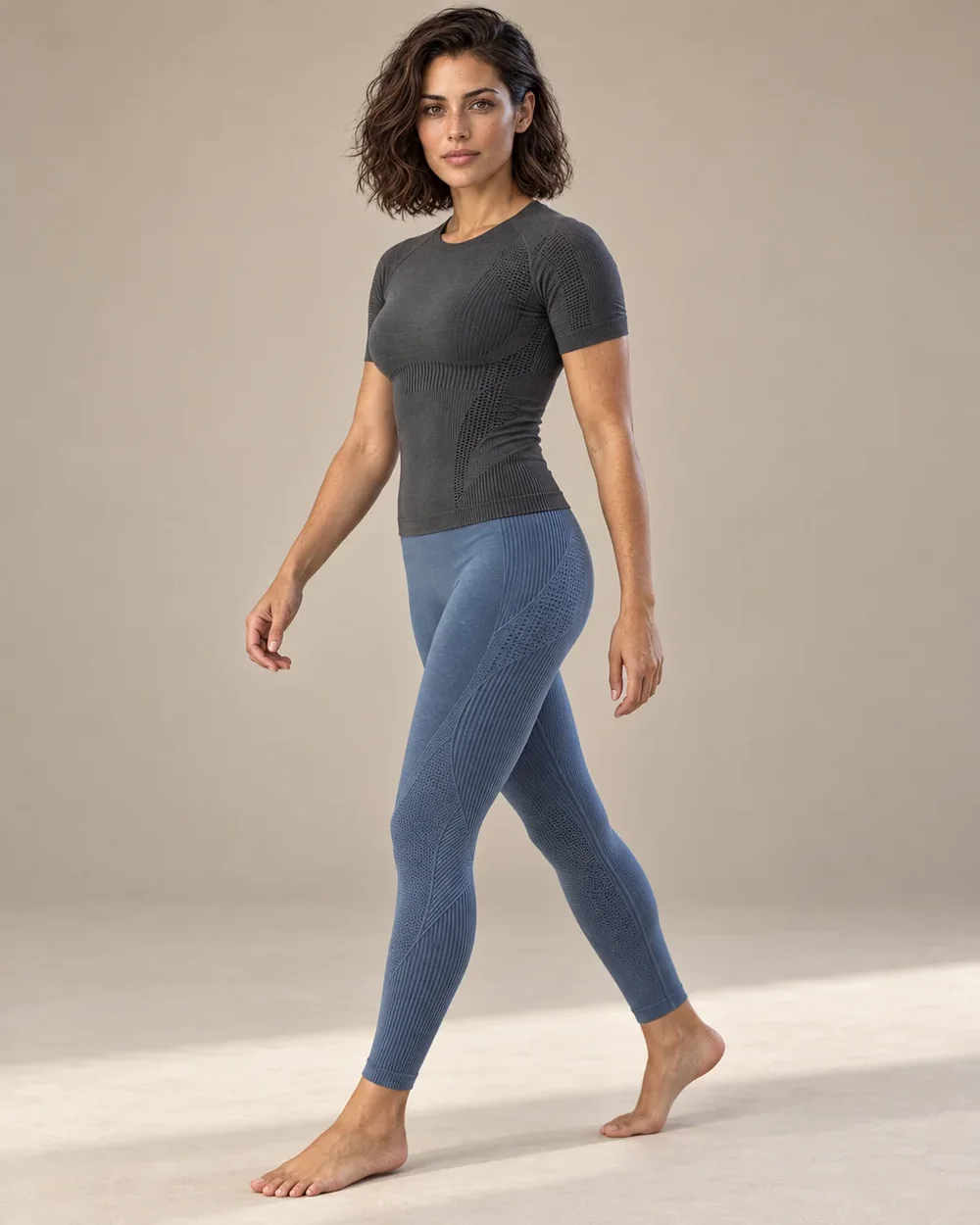
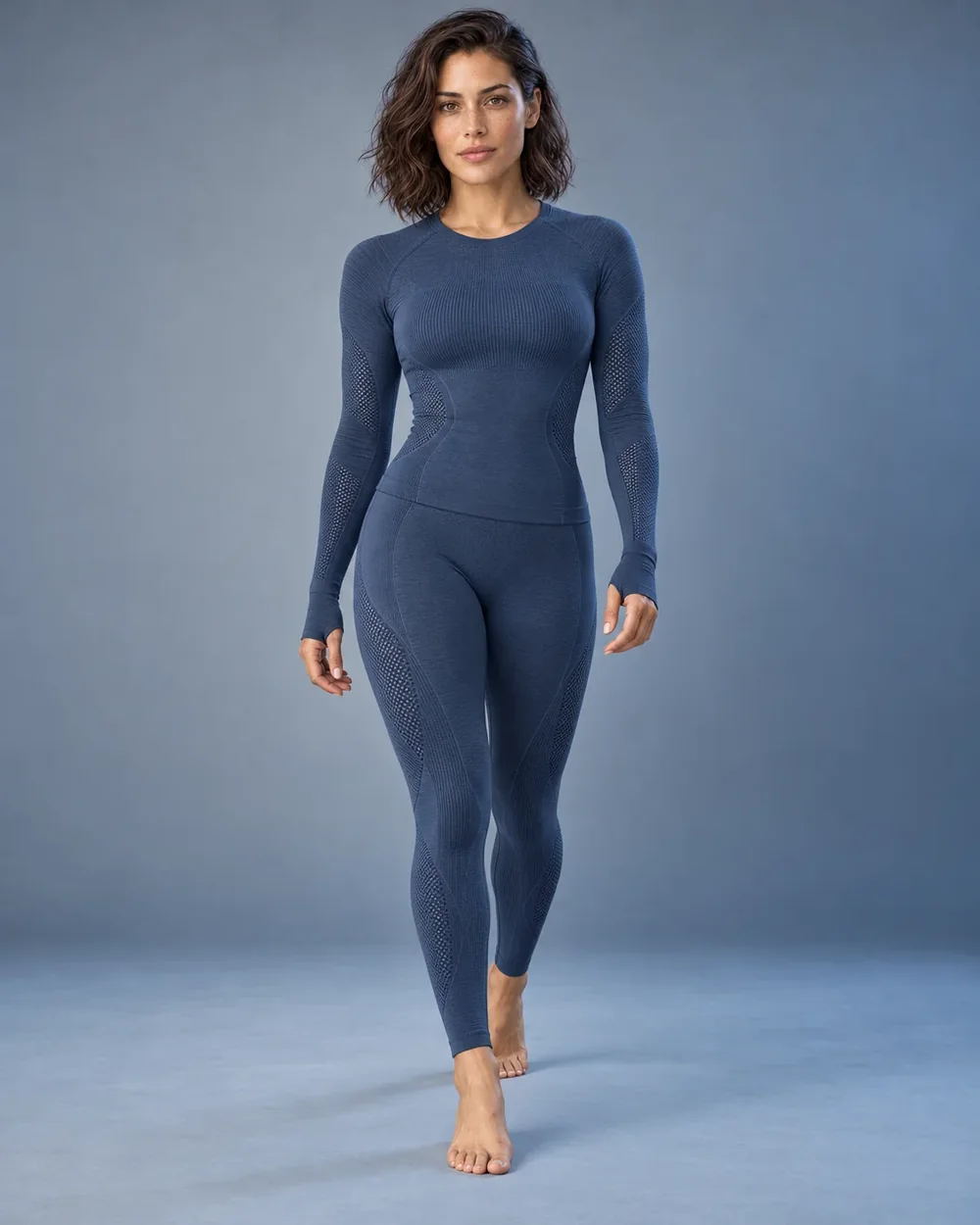
Technical knit top
Graphite / Blue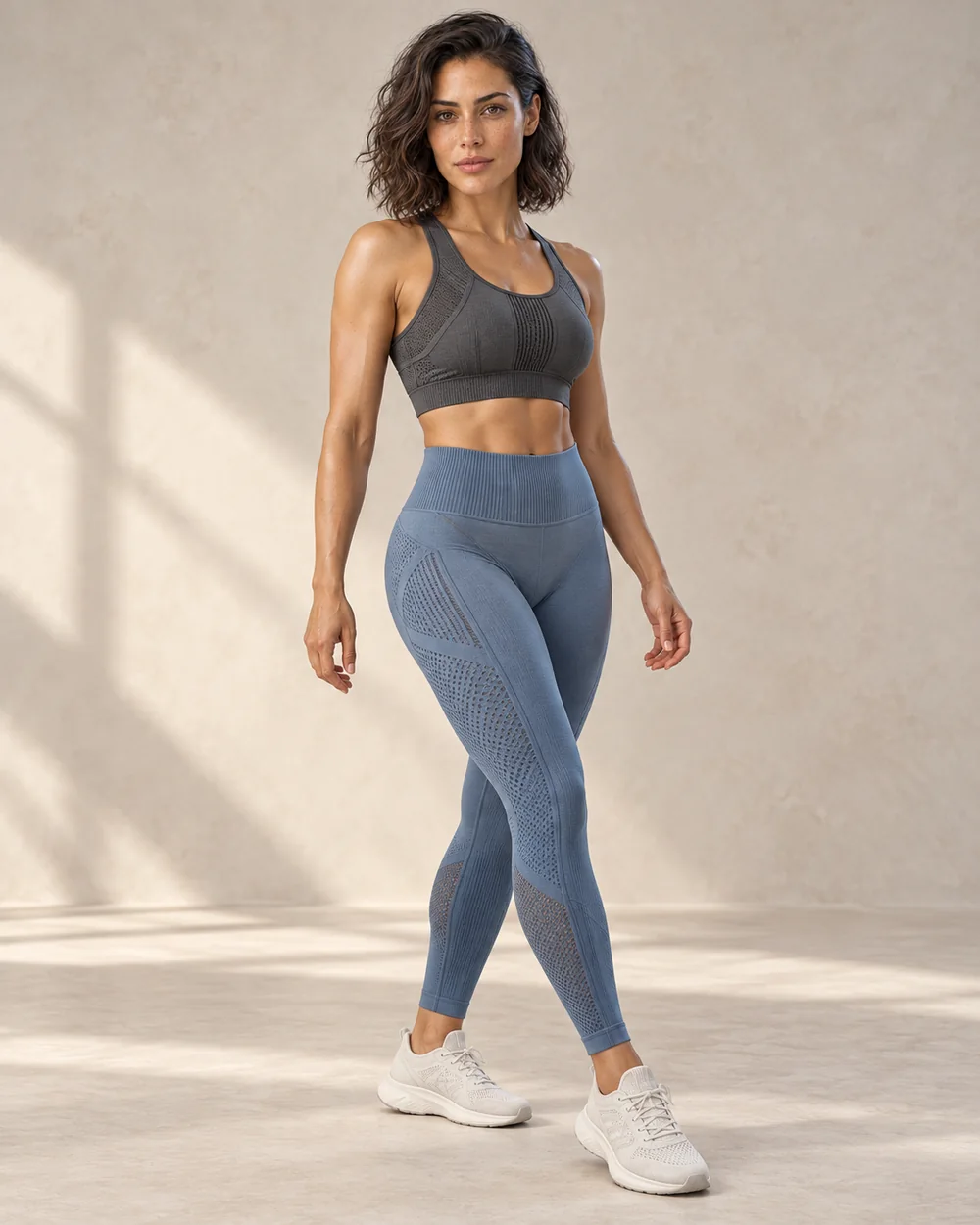
Support-zone bra & leggings
Graphite / Mineral blue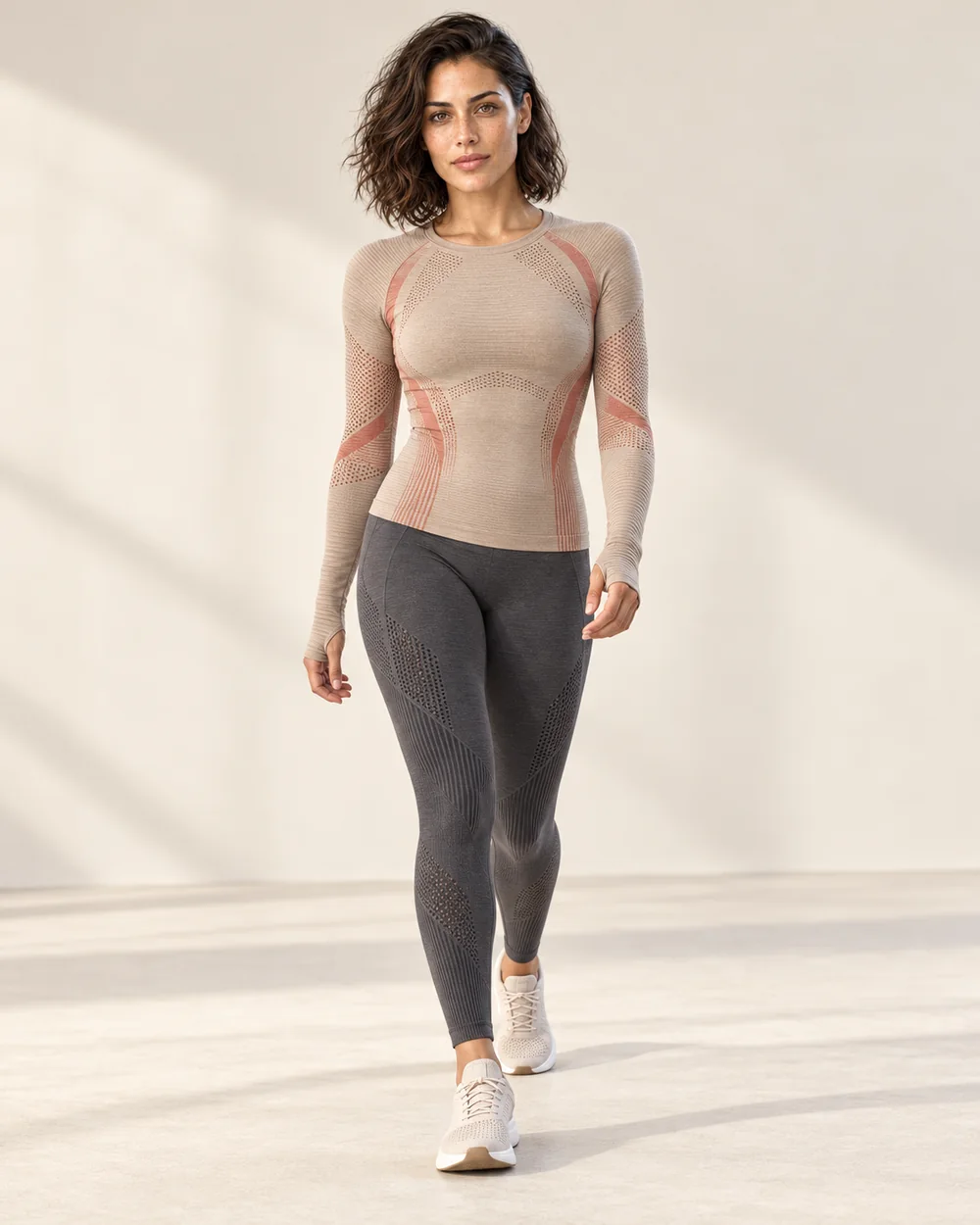
Ventilated long-sleeve system
Warm sand / Coral / GraphiteFuture Knit develops seamless garments as complete knitted systems across a 30-machine park. Product geometry, yarn, machine diameter, gauge, compression, ventilation, stretch, opacity and finishing are resolved together, then carried through sampling, fit review and a documented production master.
A focused seamless production system.
A 30-machine park supports product development and production planning across selected bodywear and activewear categories. Diameter, gauge and yarn are matched to the construction rather than treated as isolated specifications.
Seamless knitting machines
A focused machine park for prototype development, production allocation and repeat programs.
Machine diameters
Two diameter directions help address different product architectures, fit requirements and size strategies.
Primary gauge focus
Gauge is selected with yarn count, surface definition, stretch, opacity and intended garment use.
Aligned workflow
Sampling and knitting are coordinated with required sewing, dyehouse, finishing and final quality control stages.
Machine-led
precision.
Photographic views of the Santoni SM8-TOP2V system, from the complete machine to the yarn-feed and knitting-unit details.


All three views are taken from a photograph of the Santoni SM8-TOP2V system; the second and third views are technical crops of the same machine. They are representative imagery, and the exact Future Knit production configuration varies by diameter, gauge and program.
Seamless knitting is the beginning—not the whole route.
Seamless does not always mean zero sewing. Depending on the product, construction and color plan, the route may include assembly or sewing, dyehouse processing, washing, heat setting and final finishing. Each operation is defined against the approved development sample.
- Sewing operations are defined by the garment architecture and trim plan
- Dyehouse routing is aligned with fiber content, shade target and performance requirements
- Finishing conditions and measurements are documented in the production master
Diameter and gauge matching
The product brief is matched to 13-inch or 19-inch machine diameter and an E16, E17 or E18 gauge direction according to size architecture, yarn system, surface definition and intended use.
Body-mapped performance
Rib, mesh, jacquard, compression and support zones can be placed within the garment according to anatomy, movement, breathability and visual design.
Controlled production route
Digital programs move through prototype knitting, fit and wear review, color approval, required sewing, dyehouse and finishing operations, then a documented production master.
Define the product
from the inside out.
Final materials are selected against the product brief, intended use, care requirements, target market and approved testing plan.
Performance filament yarns
Polyamide or polyester filament yarns can provide smooth hand feel, abrasion resistance, color clarity and moisture movement. Elastane is integrated where stretch and recovery are required.
- Polyamide and polyester systems
- Elastane for controlled stretch
- Recycled-content options when traceability is approved
- Matte, bright or textured yarn effects
Comfort-led blends
Cellulosic, cotton-rich or fine wool blend directions may be evaluated for selected lifestyle, base-layer and studio products, subject to machine suitability, stability and care targets.
- Soft next-to-skin hand feel
- Breathability and thermal comfort
- Blend compatibility with stretch zones
- Wash and dimensional-stability review
Engineered knit architecture
The product surface can combine functional and visual zones without adding separate panels. Structure is selected against opacity, ventilation, compression and durability requirements.
- Mesh and ventilation mapping
- Rib and support structures
- Jacquard branding and texture
- Localized compression and stretch
Built for your market.
Seamless leggingsSports brasTraining topsBase layersYoga & studio wearLifestyle seamless
From brief to repeatable production.
- 01
Define fit and use
Target consumer, activity, fit, size range, support level, climate, care and commercial requirements are aligned.
- 02
Match diameter and gauge
The garment architecture is assessed against 13-inch or 19-inch machine diameter and the E16, E17 or E18 focus range.
- 03
Engineer yarn and structure
Yarn combinations, body-mapped zones and branding details are translated into an initial knitting program.
- 04
Knit and review
The prototype is checked for appearance, hand feel, stretch, opacity, measurements and dimensional behavior.
- 05
Fit, wear and finish
Movement, comfort, pressure and visual zones are refined; sewing, dyeing and finishing parameters are aligned where the design requires them.
- 06
Freeze the production master
The approved program, yarns, colors, measurements, finishing route and quality checkpoints are documented for repeatable production.
What brands need to know.
What machine diameters are available for seamless development?
Future Knit works with 13-inch and 19-inch seamless machine diameters. The suitable route depends on product type, size architecture, yarn selection, construction and the required fit.
Which seamless gauges are the main production focus?
The primary focus is E16, E17 and E18. Gauge selection is confirmed together with machine diameter, yarn count, surface definition, stretch target and product application.
How large is the seamless knitting park?
The current seamless program is supported by a 30-machine knitting park. Capacity planning is confirmed against style complexity, yarn availability, color count, size range and delivery requirements.
What products can be developed with seamless knitting?
Common programs include leggings, sports bras, training tops, base layers, studio wear and selected lifestyle products. Feasibility depends on product architecture, yarn, size range and the required machine program.
Which yarns are suitable for seamless activewear?
Polyamide, polyester and elastane combinations are widely used for performance products. Recycled-content, cellulosic or wool-blend directions can also be evaluated when the product brief and machine behavior support them.
Can compression and ventilation be integrated into one garment?
Yes. Zoned rib, mesh, stretch and support structures can be knitted into the product. Their placement and intensity are developed through prototyping and wear review rather than assumed from a digital file alone.
Does a seamless garment still require sewing or dyeing?
It can. Seamless knitting reduces many cut-and-sew operations, but necklines, straps, gussets, labels or other design details may require sewing. Depending on the yarn and color plan, the route may also include dyehouse processing, washing, heat setting and final finishing.
How is minimum order quantity determined?
MOQ depends on machine allocation, yarn availability, color program, size range and finishing requirements. Future Knit confirms the commercial production route after reviewing the technical brief.
Can you develop a private-label seamless collection?
Yes. Development can cover material direction, body mapping, prototypes, fit refinement, colorways, branding, packaging and controlled production, with the exact scope agreed for each project.